
Brand identity is the system a business uses to present itself clearly and consistently. It includes the visual elements people recognise, such as the logo, colours, typography, and imagery, but it also extends to tone of voice, messaging, and the overall feel of the brand.
That matters because a business is rarely judged on one thing in isolation. People form an impression through your website, social content, proposals, packaging, signage, emails, and everything else they see. If those touchpoints feel disconnected, the business often feels less established and less trustworthy than it really is.
This post explains what brand identity is, what it normally includes, how it differs from branding, and why consistency is the part that makes it work commercially.
Quick Answer
Brand identity is the combination of visual and verbal elements that shape how a business presents itself and is recognised. It usually includes the logo, colours, typography, imagery, tone of voice, and other brand assets used consistently across customer touchpoints. In simple terms, brand identity is the outward expression of the brand.
1) Brand identity is how a business takes shape in the real world
A lot of businesses hear the phrase “brand identity” and assume it simply means logo design. The logo is part of it, but not the full picture. Brand identity is the system, not just the mark. It is what makes the business look and feel like itself wherever it appears.
In practical terms, identity is what stops the business feeling fragmented. If your website looks one way, your social content another, and your printed material something else again, the brand feels inconsistent. A stronger identity creates cohesion, so the business becomes recognisable across those touchpoints.
A useful way to think about brand identity is as a set of repeatable rules and assets. The point is to make the brand easier to apply consistently, not improvised every time something new is created.
2) Brand identity is not the same as branding
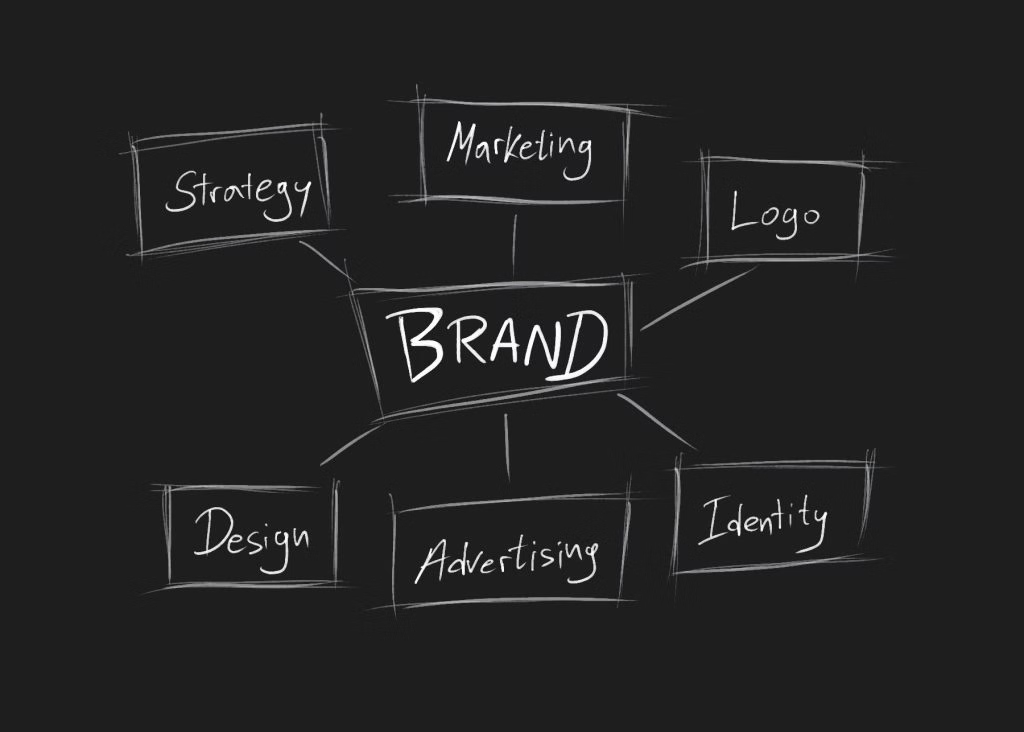
This is where businesses often get tripped up. Branding is the broader process of shaping how a business should be perceived. Brand identity is the set of elements used to express that outwardly. One is direction, the other is execution.
A simple way to explain it is this. Branding is the strategic choice of what the business should stand for and how it should be understood. Brand identity is what turns that into something people can actually see and experience through design and communication.
If your strategy says the business should feel premium, modern, approachable, or expert led, identity is what makes that consistent across your website, marketing materials, and content. Without identity, branding intentions are harder to apply in the real world.
3) Brand identity is also not the same as a logo
A logo is one part of brand identity, but it cannot carry a brand on its own. A business can have a professionally designed logo and still look inconsistent or underdeveloped if there is no clear type style, colour palette, imagery direction, or tone of voice around it.
This distinction matters because businesses often invest in a logo and then wonder why the brand still feels unclear. The logo is being asked to do too much. Brand identity gives it context and makes it part of something coherent.
In practical terms, a logo becomes more effective when it has supporting rules. How it should be used, what spacing it needs, what versions exist for different formats, and what visual language sits around it. That is identity, not just logo design.
4) What is usually included in brand identity
Brand identity usually includes a mix of visual and verbal components. On the visual side, that often means the logo, logo variations, colour palette, typography, imagery style, graphic elements, iconography, layouts, and brand guidelines. On the verbal side, it may include tone of voice, messaging principles, positioning cues, and rules for how the business should sound in writing.
The exact mix depends on the business. A small company may start with a leaner system focused on core visual and messaging assets. A more established business may need a broader toolkit that works across web, print, social, packaging, signage, and sales materials.
The key point is that identity is meant to make the brand repeatable. It creates a standard that can be applied consistently, even when different people or teams are producing content.
5) Why brand identity matters for a business
A clear brand identity helps a business become easier to recognise and easier to trust. When a business looks consistent and intentional, it usually feels more established and more credible. That credibility matters because it reduces doubt before someone decides whether to engage.
It also helps internally. When identity is clearly defined, decisions get easier. Designers know how things should look, marketers know how the brand should sound, and the business is less likely to slip into inconsistency from one channel to the next.
In practical business terms, identity reduces friction. It helps people recognise you faster, understand you more clearly, and see a consistent standard across touchpoints. It does not guarantee results on its own, but it gives the business a stronger foundation to build on.
6) Signs a business may need stronger brand identity
A business may need stronger brand identity when it looks inconsistent across channels, feels unclear next to competitors, or no longer reflects the level it operates at. Another common sign is when the team struggles to make anything look “on brand” because there are no clear rules, assets, or direction to work from.
This often happens when a company has grown but its presentation has not caught up. What worked at the start may no longer suit the audience, positioning, or quality of the business now. In those cases, the issue is not always the logo.
Often the problem is the wider identity is either too thin or too inconsistent to support the brand properly. Strengthening the system tends to produce faster improvements than obsessing over the mark in isolation.
7) Brand identity needs consistency to work
One of the biggest points behind brand identity is consistency. Identity only becomes meaningful when people encounter it repeatedly in a consistent form. A strong colour palette used once does not build recognition. A tone of voice used occasionally does not create distinction.
Brand identity works by making repeated exposure feel joined up. The business becomes easier to spot and easier to remember over time. That only happens when the same rules and assets are applied across website, content, and customer materials.
This is why brand guidelines matter. They are not “nice to have”. They are what allow the brand to stay coherent as it expands into more touchpoints and more people contribute to content creation.
8) Brand identity should reflect the business, not just design trends
A good brand identity should feel appropriate to the business itself. It should fit the audience, the offer, the tone, and the level the company wants to operate at. Good identity work is not just about making things look cleaner or more modern.
It is about making sure the business is presenting itself in a way that supports where it is going. A law firm, a creative studio, a construction business, and a children’s product brand should not all be drawing from the same visual logic. The identity should fit the business, not the trend cycle.
When identity is built on clear direction, it ages better and performs better. It becomes a platform the business can grow on, rather than a surface layer that needs reworking every time design fashion shifts.
How Dope Studio Can Help
At Dope Studio, brand identity is not about making a business look better in isolation. It is about creating a clearer, more usable, and more consistent system for how that business presents itself across the places people actually see it. That means looking beyond one asset and building a toolkit that makes the brand repeatable.
The strongest identity work tends to come from clearer direction rather than more decoration. When the business knows how it wants to be perceived, the visual and verbal side has something solid to express, and that usually leads to a more confident result.
To learn more about how we approach branding and design, explore our branding and visual identity services here: Branding & Visual Identity
The Bottom Line
Brand identity is the system that makes your business recognisable and consistent across every touchpoint. It is not a logo on its own, and it is not branding in the abstract. It is the practical set of visual and verbal assets that make the brand repeatable in the real world.
If your business looks inconsistent across channels, or your team struggles to produce materials that feel aligned, the issue is rarely effort. It is usually the absence of clear identity rules and reusable assets. A stronger identity reduces friction, speeds up decision making, and improves how the business is perceived before people even speak to you.
When identity is built with consistency in mind, it becomes a commercial advantage. It makes the brand easier to recognise, easier to trust, and easier to scale across channels without losing clarity.
FAQ
Is brand identity just a logo?
No. A logo is one part of brand identity, but identity usually includes colours, typography, imagery, voice, tone, and other assets used to present the brand consistently.
What is the difference between branding and brand identity?
Branding is the wider process of shaping how a business is perceived. Brand identity is the set of visual and verbal elements used to express that outwardly.
Why is brand identity important?
Because it helps a business become more recognisable, more consistent, and more clearly differentiated. When identity is clear, the brand is easier to apply across touchpoints and easier for customers to remember.
What is included in brand identity?
Usually things like the logo, colour palette, typography, imagery style, graphic elements, tone of voice, and brand guidelines.
Can a business have branding without strong brand identity?
It can have intentions around branding, but without a clear identity system those intentions are harder to express consistently. Brand identity is what helps the brand show up clearly in the real world.