
When businesses begin planning a video, one of the first questions that comes up is whether they actually need a script, storyboard, or creative brief. The honest answer is not every project needs all three at the same level of detail, but most successful videos do need some version of them.
This matters because a business video is easier to film, easier to edit, and far more likely to perform well when the team knows the goal, the message, and the visual direction in advance. When that alignment is missing, the “real” decisions get pushed into the edit, where every change costs more time and usually weakens the outcome.
This post explains what each tool is for, when you actually need it, and how to scale the planning to match the project.
Quick Answer
Yes, most business videos benefit from a creative brief, and many also need a script or storyboard. A creative brief aligns the goal and audience, a script shapes what will be said, and a storyboard helps visualise how the video will look. Simple projects may not need all three in full detail, but skipping planning usually creates problems later.
1) The creative brief is usually the starting point
If there is one document that matters most at the start of a business video, it is usually the creative brief. The brief clarifies what the video is for before anyone starts writing lines or thinking about visuals.
For most business projects, that means defining the audience, the objective, where the video will be used, what tone it should have, and what action the viewer should take afterwards. Without that foundation, it becomes much harder to judge whether the script is right or whether the visuals make sense.
A brief does not need to be long or overly corporate, but it does need to create alignment. If the brief is unclear, the rest of the project often becomes slower, less focused, and more expensive to revise.
2) A script matters when the message needs control
Once the brief is clear, the next question is whether the project needs a script. In many cases, it does, especially if the message needs to be concise, persuasive, or carefully structured. Explainer videos, service videos, promotional videos, voiceover led content, and anything with compliance or accuracy requirements typically benefits from a script.
That said, not every video needs a rigid word for word script. Testimonial videos and behind the scenes content often perform better when the delivery feels natural. In those cases, talking points, interview prompts, and a clear narrative structure can be a better fit than forcing scripted lines.
The key point is that the message still needs shaping. Even when the words are not written line by line, you still need a clear outcome for what the viewer should understand by the end.
3) A storyboard helps when visuals need planning
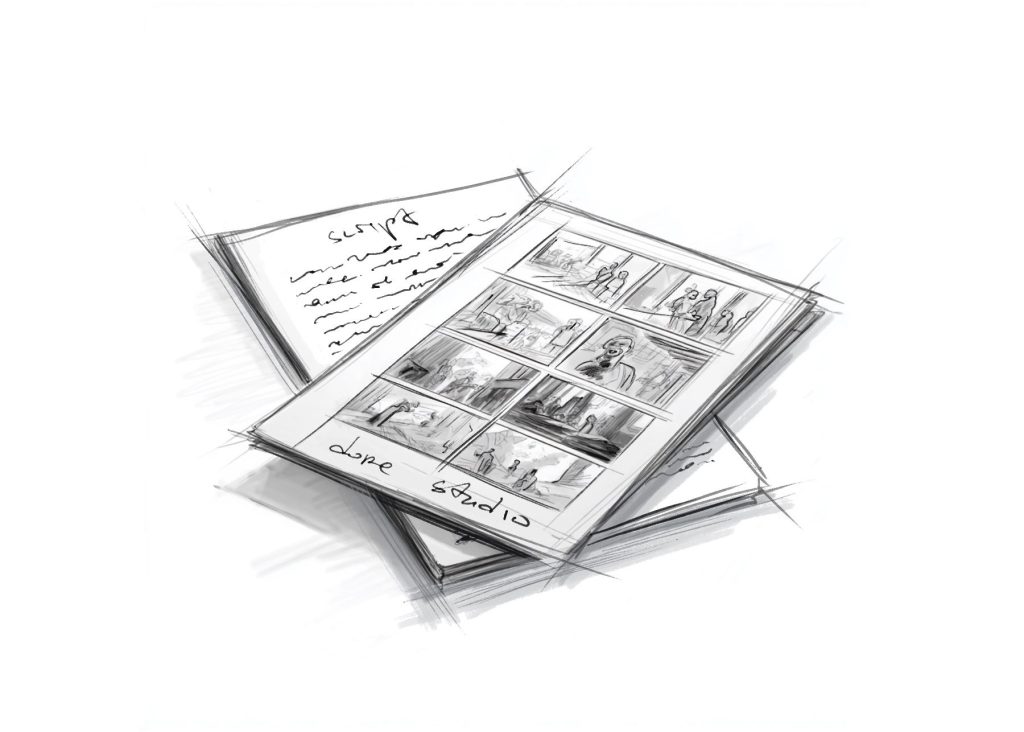
A storyboard is the most visual of the three tools, and it is often the one businesses are least certain about. It is not only for big productions. It is a practical way to map the video sequence and spot visual gaps before filming starts.
Storyboards are particularly helpful when the visuals carry a lot of the communication. If the video includes multiple scenes, transitions, product shots, motion graphics, on screen text, or a carefully shaped brand feel, a storyboard helps everyone see the structure and intent in advance.
For simpler business videos, a full storyboard may not be necessary. A one camera interview or straightforward talking head piece can often be planned well with a strong brief, a script or interview structure, and a clear shot list.
4) You do not always need all three at the same level
One reason businesses hesitate over this question is that “brief”, “script”, and “storyboard” can sound heavier than the project really needs. In reality, these tools can be scaled to match the job.
A small business testimonial video might only need a short brief, a list of interview questions, and a light visual plan. A polished homepage brand video may need a detailed brief, a refined script, and a storyboard to coordinate tone, sequence, and shot design across the edit.
The aim is not paperwork for the sake of it. The aim is making sure the message, the visuals, and the outcome are aligned before time and budget are spent on production.
5) What happens when you skip them
The strongest reason to use a creative brief, script, or storyboard is not that they sound professional. It is that they prevent avoidable problems. When alignment is missing early, it usually shows up later as delays, rework, and a finished video that feels unfocused.
A missing brief often leads to unclear goals and decision making by committee. A missing script can lead to rambling messaging or an edit that never quite finds the point. A missing storyboard can create visual gaps, inconsistent tone, or confusion about what footage actually needs to be captured.
Skipping these tools may save time at the beginning, but it often creates more time pressure and more revision work later. That is where the real cost usually appears.
6) Which one matters most for SEO led business content
For search led business content, the creative brief often matters most first because it keeps the video tied to the search intent and business objective. The script usually comes next because the wording needs to answer the query clearly and naturally. The storyboard becomes more important when page experience or visual storytelling is doing a larger share of the conversion job.
This order makes sense commercially. Search led video usually has to be useful before it is cinematic. A clear brief defines the target question and user need. A clear script answers it. Visual planning then strengthens the message where it adds value rather than adding complexity.
If you want the video to support a service page or a blog that targets a specific query, planning is what stops the video drifting into a “nice looking” asset that does not actually help the page perform.
How Dope Studio Can Help
At Dope Studio, the useful question is not whether every project must have a long script or a formal storyboard. It is what level of planning the project needs in order to work properly. Some videos need a concise creative brief and a tightly written script. Others need stronger visual planning because the way the video looks is doing much of the persuasive work.
The aim is always the same, to make sure production is clear before filming begins. That usually leads to a smoother process, a more focused edit, and a stronger finished video that fits the page, the message, and the business goal.
To learn more about how we approach commercial content, explore our video production services here: Video Production
The Bottom Line
Most businesses do not need a heavyweight process for every video, but most do need clarity before they film. A brief gives you alignment, a script gives you control of the message, and a storyboard gives you control of the visuals. The more important the video is to your marketing, the more those tools matter.
If you are trying to move faster, planning is often the fastest route. It reduces guesswork, reduces revisions, and makes it easier to judge whether the finished video is doing what it is meant to do. The time you spend upfront is usually recovered later in a smoother shoot and a cleaner edit.
If you are unsure what you need, start with a short brief and build from there. In most cases, that single step improves the quality of decisions across the entire production.
FAQ
Do all business videos need a creative brief?
Most benefit from one, even if it is short. A creative brief defines the audience, the message, and what the video is meant to achieve, which keeps production decisions aligned.
Is a script always necessary for a video?
Not always word for word, but most business videos need structured messaging. For testimonials or informal content, talking points and prompts can work better than rigid scripting.
What is the difference between a storyboard and a shot list?
A storyboard shows scenes or shots in sequence so everyone can visualise the video structure. A shot list is a practical checklist of the footage you need to capture on the day.
Can I skip the storyboard for a simple video?
Sometimes, yes. Simple talking head videos can often be planned with a brief, a message structure, and a shot list. If the visuals need careful sequencing, a storyboard is usually worth it.
What happens if I start filming without a clear brief?
Projects often become less focused and harder to manage. A clear brief surfaces issues early, sets expectations, and gives the script and visuals a stronger direction.