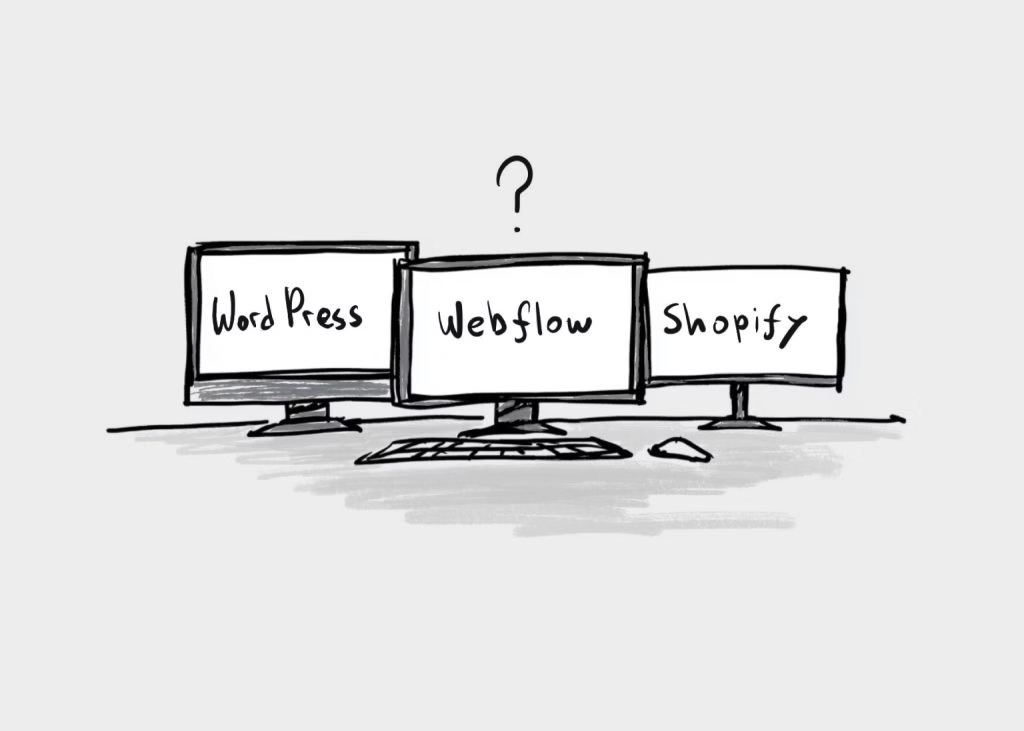

Website pricing can feel all over the place. One supplier offers a site for a few hundred pounds, another quotes several thousand, and an agency may suggest a budget that sits much higher again. The reason is simple: “a website” can mean anything from a basic template setup to a fully planned business asset built around design, SEO, performance, content, and conversion.
For most UK small businesses in 2026, a professional website will usually cost somewhere between £3,000 and £10,000. A simple brochure site can cost less, while a larger custom website, eCommerce store, membership platform, or lead generation site with deeper strategy can move into £10,000 to £30,000+.
This post explains what drives the cost of a professional business website, what you should expect at different price points, and how to decide what level of investment makes sense for your business.
Quick Answer
A professional business website in the UK typically costs between £3,000 and £10,000 for a well-designed small business site. Larger or more complex websites can cost £10,000 to £30,000+, especially when they include strategy, custom design, SEO, copywriting, eCommerce, booking systems, integrations, or advanced functionality. The final cost depends on scope, not just page count.
1) Why website costs vary so much
Website costs vary because businesses are often comparing completely different levels of work. A cheap website may be a pre-built template with basic text and images added. A professional business website usually includes planning, design, development, mobile optimisation, content structure, SEO foundations, performance work, testing, and launch support.
Those are not the same product. One gets you online. The other is built to help the business look credible, explain its offer, rank in search, and turn visitors into enquiries.
The biggest mistake is comparing quotes by page count alone. A five page website with proper strategy, copywriting, service structure, speed optimisation, and conversion planning can be more valuable than a 20 page site built without direction.
2) Typical website cost ranges in the UK
DIY website builder: £100 to £500+ per year. This usually suits very early stage businesses, side projects, or temporary sites. It can be cheap to start, but the trade-off is usually limited flexibility, generic design, weaker SEO control, and more time spent doing the work yourself.
Basic freelancer website: £800 to £2,500. This can work for a simple online presence, especially if the business only needs a few pages and has its own copy and imagery ready. Quality varies heavily at this level, so it is important to check previous work carefully.
Professional small business website: £3,000 to £10,000. This is the realistic range for many UK businesses that want a site built properly. It should include custom design or carefully adapted design, mobile responsiveness, clear service pages, basic SEO setup, enquiry forms, speed considerations, and a structured launch process.
Advanced custom website: £10,000 to £30,000+. This level usually applies when the site needs deeper planning, larger page architecture, copywriting, integrations, booking systems, eCommerce, custom functionality, or more advanced conversion and SEO work.
Large business or platform build: £30,000 to £75,000+. Larger projects can involve complex UX planning, custom development, multiple user journeys, API integrations, user accounts, product databases, internal workflows, and long-term technical support.
3) What you should get from a professional website build
A professional website should be more than a set of designed pages. At minimum, the process should include discovery, sitemap planning, design, development, responsive testing, basic SEO foundations, content structure, analytics setup, security considerations, and support around launch.
If the site is designed to generate enquiries, it should also include clear calls to action, useful service page structure, fast loading, mobile usability, and a simple user journey. Visitors should be able to understand what you do, who you help, and how to contact you without having to work for it.
Good website design also considers the business behind the screen. That means the site should be easy to update, built on sensible technology, and structured so it can grow as your services, content, or marketing activity expands.
4) What affects the cost of a business website
Scope and page structure. A small brochure website with five core pages is very different from a site with service subpages, case studies, location pages, blog templates, landing pages, and multiple conversion routes. More structure means more planning, design, content, and testing.
Design quality. Template-led design is faster and cheaper. Custom design takes longer because the visual system, layouts, and user experience are shaped around the business rather than fitted into an existing pattern.
Content and copywriting. Many website delays happen because content is underestimated. If the agency is writing service pages, headlines, calls to action, metadata, and conversion copy, that adds cost, but it also usually improves the finished site.
Functionality. Booking systems, payment gateways, eCommerce, calculators, gated content, directories, memberships, CRM integrations, and custom forms all add time. The more the site needs to do, the more it costs to plan, build, and test.
SEO and performance requirements. A site built with search and speed in mind takes more care than a site that simply looks presentable. Page structure, metadata, internal linking, image optimisation, Core Web Vitals, and technical setup all matter if the website is expected to perform.
5) Why cheap websites often become expensive later
A cheap website is not automatically a bad decision. If you are testing an idea or need a temporary presence, it may be enough. The problem comes when a low-cost website is expected to perform like a professionally planned business asset.
Common issues include weak mobile design, slow loading, poor content structure, no SEO foundation, unclear calls to action, awkward editing systems, and layouts that cannot grow with the business. The site may look acceptable at launch, but start limiting the business quickly.
This is where the cost becomes hidden. If you need to rebuild the site after a year, fix technical issues, rewrite poor content, or recover from weak SEO foundations, the cheap option can end up costing more than building it properly the first time.
6) How much should a small business spend on a website
For most small businesses that rely on enquiries, a sensible website budget usually starts around £3,000 to £6,000. That should be enough for a focused, professional site with clear core pages, strong mobile presentation, enquiry forms, and basic search foundations.
If the website is expected to support SEO, paid ads, recruitment, case studies, or multiple services, a more realistic budget is often £6,000 to £10,000+. That allows more time for strategy, content structure, stronger design, and better conversion planning.
The question is not “what is the cheapest website I can get?” It is “what does this site need to do for the business?” A site that generates qualified enquiries can pay for itself many times over. A cheap site that does not convert is still expensive if it produces nothing.
7) Ongoing website costs to budget for
The build cost is only part of the picture. Most businesses should also budget for ongoing hosting, domain renewal, software licences, security updates, maintenance, backups, performance monitoring, and content updates.
For a professional WordPress website, ongoing costs can range from a modest hosting and maintenance setup to a more complete support package that includes updates, fixes, reporting, small changes, and performance checks. The right level depends on how important the site is to your business.
If the website is a key source of leads, treating maintenance as optional is risky. A neglected site becomes slower, less secure, harder to update, and more likely to break when plugins, themes, or integrations change.
8) What a good website quote should include
A good website quote should clearly explain what is included. Look for detail around sitemap, design process, number of page templates, development scope, responsive testing, SEO setup, content responsibilities, forms, integrations, analytics, training, launch support, and revision rounds.
It should also be clear what is not included. Copywriting, photography, hosting, maintenance, plugin licences, advanced SEO, email setup, and third party software can all affect the final cost.
If the quote is vague, ask for clarification before you commit. A cheap quote with unclear scope is often where extra costs appear later.
How Dope Studio Can Help
At Dope Studio, we build professional websites for businesses that need more than a digital placeholder. We focus on structure, design, performance, and conversion so the site looks credible, loads well, and gives visitors a clear route to enquiry.
Our process covers strategy, design, development, SEO foundations, launch support, and ongoing improvements where needed. Whether you are building your first professional website or replacing a site that no longer reflects the business, we approach the work commercially, not just visually.
To learn more about how we approach professional business websites, explore our web design and development services here: Web Design & Development
The Bottom Line
A professional business website in 2026 usually costs more than a quick template build because it has to do more. It needs to explain the business clearly, perform well on mobile, support search visibility, convert visitors, and give the company a platform it can build on.
For most UK small businesses, a realistic professional website budget is £3,000 to £10,000. More complex websites with custom functionality, eCommerce, integrations, or advanced content and SEO requirements can move well beyond that.
The right website budget should be based on value, not just cost. If the site helps generate enquiries, supports sales, improves credibility, and reduces friction for customers, it is not just a design expense. It is part of how the business grows.
FAQ
How much does a small business website cost in the UK?
Most professional small business websites in the UK cost between £3,000 and £10,000, depending on design quality, page structure, content, SEO, and functionality. Simpler sites can cost less, while more complex projects cost more.
Can I get a website for less than £1,000?
Yes, but it will usually be a basic template, DIY builder, or very limited freelancer build. That can work for a temporary presence, but it often lacks the structure, performance, and SEO foundations needed to generate consistent enquiries.
Why do web design agencies charge different prices?
Because the scope and process vary. One quote may only cover a basic design and build, while another includes strategy, copywriting, SEO, custom design, technical setup, integrations, testing, and launch support.
What should be included in a professional website build?
A professional build should usually include planning, design, development, mobile optimisation, basic SEO setup, enquiry forms, analytics, testing, and launch support. More advanced projects may also include copywriting, integrations, eCommerce, or ongoing optimisation.
Is a professional website worth the investment?
Yes, if the website is built to support business goals rather than simply exist online. A professional website can improve credibility, generate enquiries, support SEO, and give the business a stronger platform for future marketing.